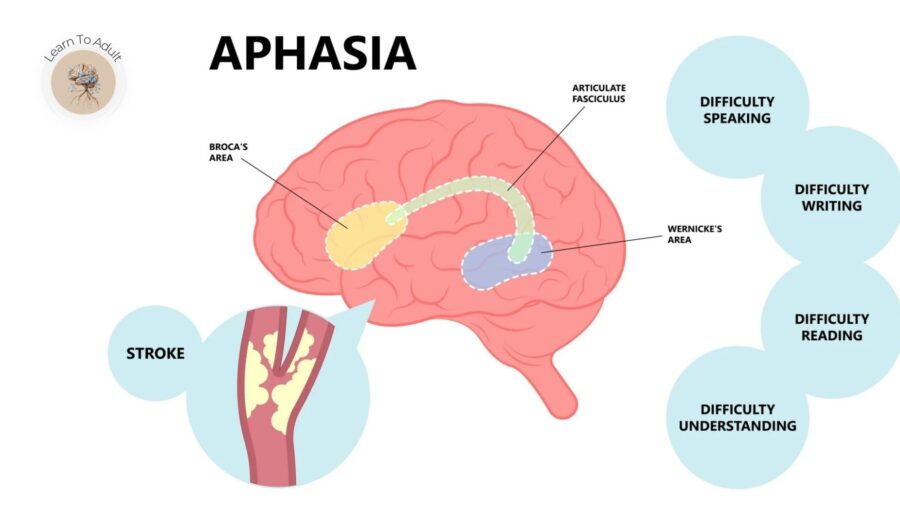
Ever wondered what happens when your brain gets damaged, malfunction—whether through a stroke, an accident, or an injury? How does your brain actually handle a one-on-one conversation, or even just the simple act of ordering a coffee?
The Voice (Broca’s Area)
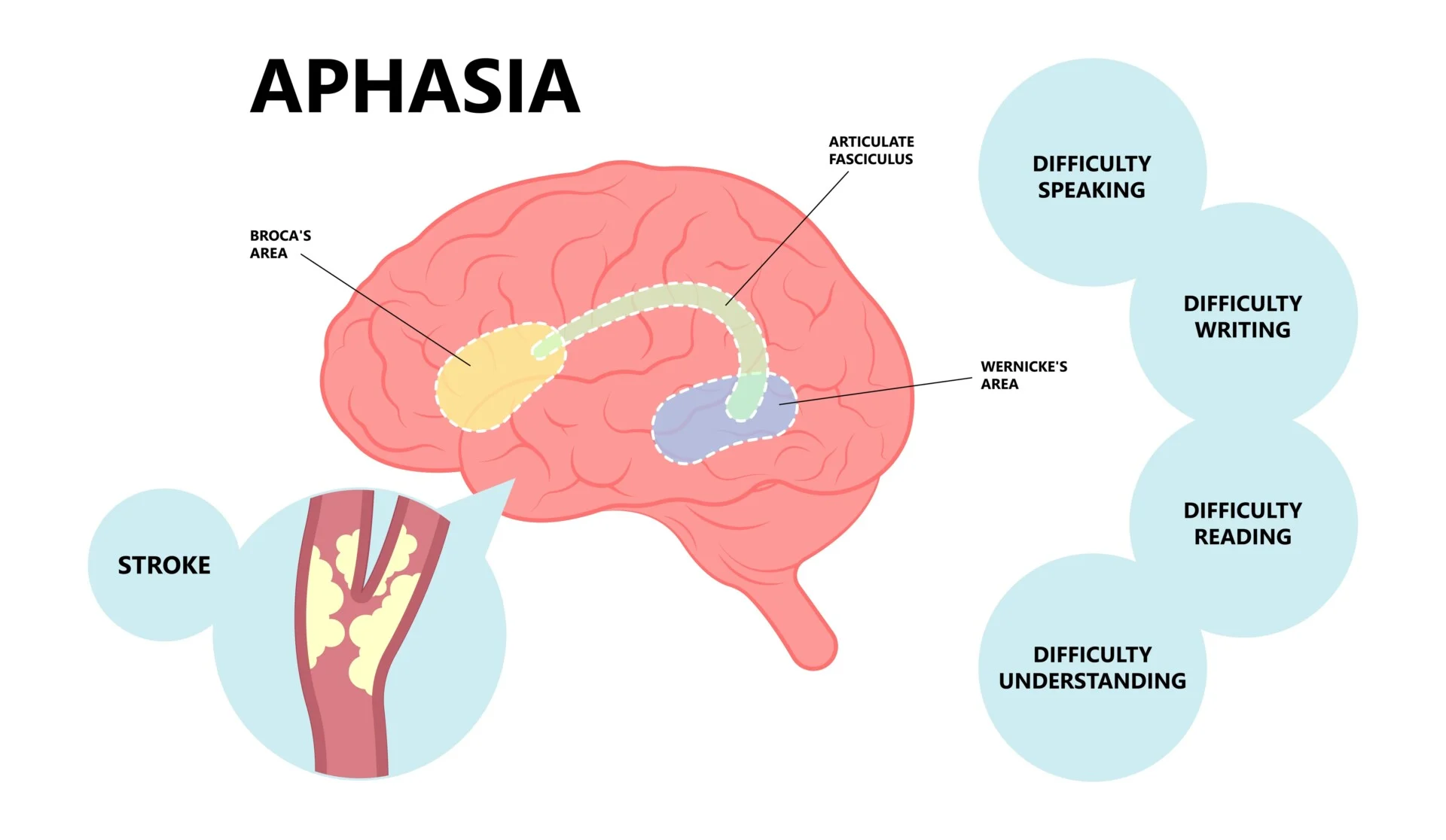
Located in your frontal lobe, this is your speech producer. It’s the director calling the shots on how your mouth and tongue move. When it’s glitching: You know exactly what you want to say, but the words feel “stuck.” It’s like having the lyrics in your head but your mic is muted.
“Malfunction in Broca’s area is best understood as a disconnect between mental intent and physical execution. Unlike other cognitive issues where the “thinking” is clouded, here the person remains intellectually sharp and fully understands everything being said to them; however, the “bridge” to the motor muscles used for speech is broken. It is a state of expressive aphasia, where the brain’s librarian knows exactly which book of words to grab, but the exit door to the vocal cords is jammed shut. This creates a “telegraphic” style of communication, where the speaker must exhaustively strain to produce even simple, two-word phrases, stripped of all grammar and rhythm. Because their self-monitoring is still intact, the individual is painfully aware of their own struggle, making the condition one of the most frustrating and isolating neurological malfunctions.”
The Decoder (Wernicke’s Area)
The Controller (Prefrontal Cortex)
This is the CEO of your brain. It handles the “vibes”—planning what to say, picking up on sarcasm, and knowing when it’s your turn to talk so you don’t accidentally interrupt. When it’s glitching: Conversations get messy. You might be too blunt, lose your filter, or struggle to stay on track.
“Malfunction in the prefrontal cortex is like imagining a “company without a CEO” or a high-end car with a broken steering wheel. While the other parts of the brain can still see, hear, and talk, there is no longer a central authority to decide what to do with that information. This is a failure of executive function. Without this area, the “social filter” disappears; a person might say exactly what they are thinking, regardless of how rude or inappropriate it might be. Decision-making becomes a mountain to climb—simple choices like picking a cereal can take hours because the brain can no longer prioritize one thought over another. It is a loss of the future-tense self, where the ability to plan ahead or control impulsive urges vanishes, leaving the person tethered only to their immediate, raw instincts. In essence, the “personality” and “willpower” of the individual are what suffer most, making it a “hidden” disability that others often mistake for a change in character rather than a physical injury.”
The Connection (Arcuate Fasciculus)
These areas are linked by a “super-highway” of fibers called the arcuate fasciculus. If a brain injury or stroke hits these connections, the “studio” can’t communicate, leading to major breakdowns in how we express ourselves. The good news? Our brains are incredibly “plastic” (neuroplasticity!), meaning with the right therapy and time, the brain can often find new ways to rewire those broken circuits.
“Malfunction in the arcuate fasciculus is best understood as a “total communication breakdown” between two perfectly functional departments. In this scenario, your “listening center” (Wernicke’s) and your “speaking center” (Broca’s) are both healthy and working fine, but the high-speed fiber-optic cable connecting them has been severed. This results in conduction aphasia, a bizarre condition where you can understand a complex story perfectly and you can speak your own thoughts fluently, but you are physically unable to repeat words spoken by someone else. It is as if the brain’s “copy and paste” function has been deleted; the information is received in the back of the brain, but it simply cannot be routed to the front to be echoed. Because the self-monitoring loop is broken, you may hear yourself make a mistake but find it impossible to “send the correction” across the bridge to fix it.”
The Complete Breakdown of the Communicative Function
A complete breakdown, malfunction of these four regions results in a total collapse of executive, linguistic, and communicative function. The prefrontal cortex fails to regulate social behavior and goal-oriented planning, while Wernicke’s area leaves the individual unable to decode incoming language or monitor their own speech for meaning. This is exacerbated by a severed arcuate fasciculus, which prevents the internal relay of information between comprehension and output centers, making repetition impossible. Finally, Broca’s area paralysis ensures that even if a thought is formed, the motor commands required to physically articulate speech are lost, resulting in a profound state of global isolation.