Why the Learn To Adult Foundation Matters: Rebuilding Possibility in South Africa’s Forgotten Rural Towns
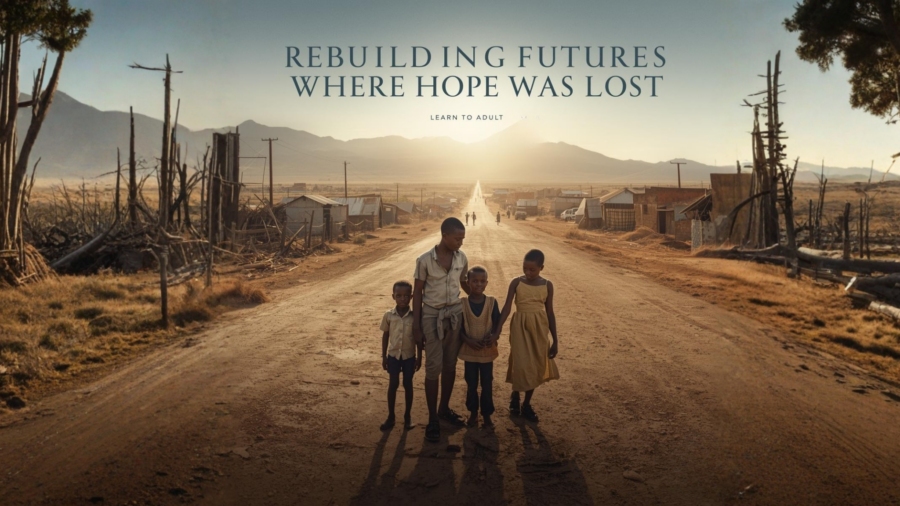
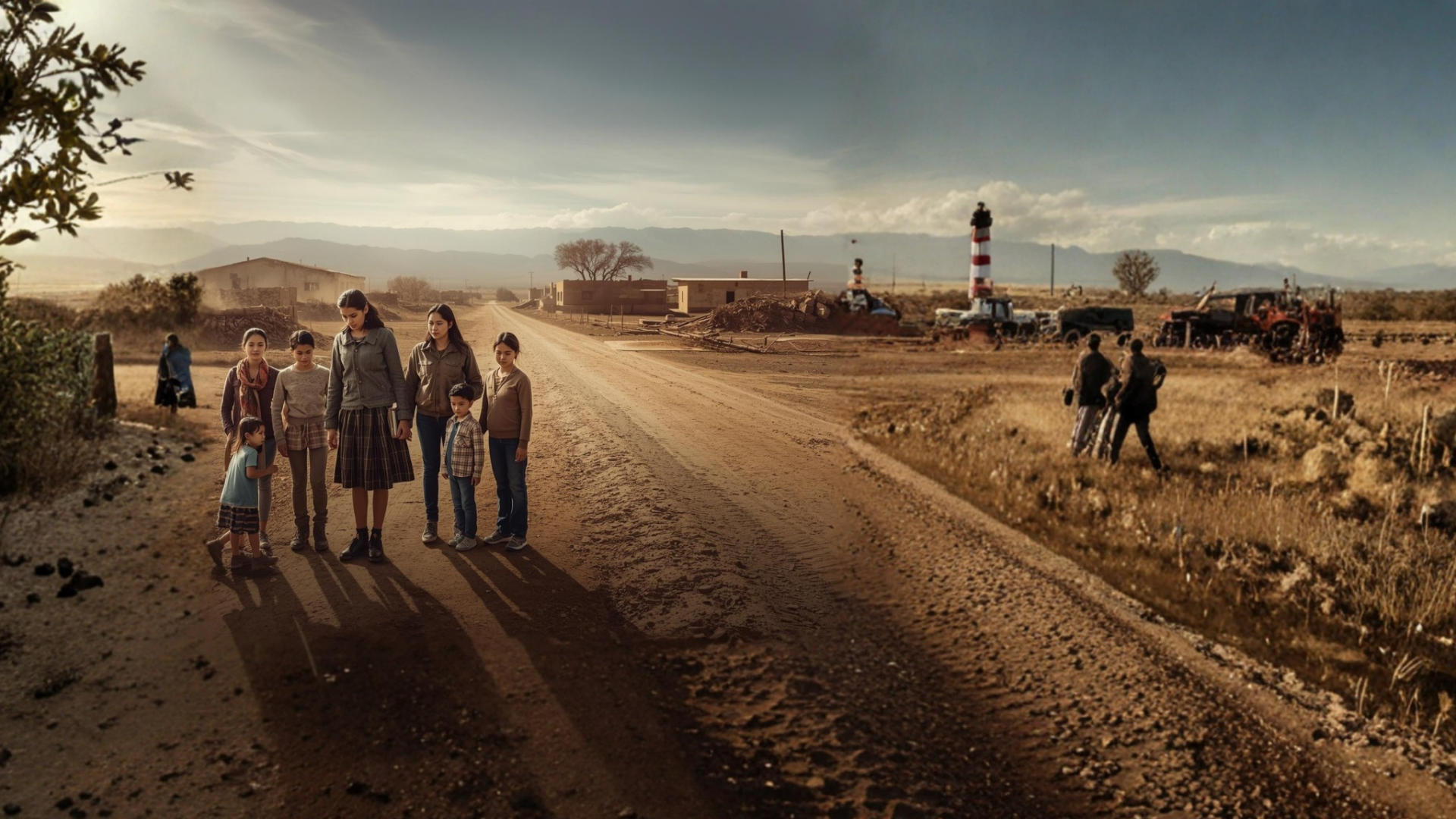
Across the vast stretches of the Karoo and other rural outskirts of South Africa lies a reality that is largely invisible to urban policy, funding priorities, and public discourse. These are not just quiet towns fading into the background—they are environments where social, economic, and psychological systems have eroded to a point where entire generations are growing up without viable pathways forward.
In many of these towns, the youth are not leaving because they want to—they are leaving because there is nothing left to stay for. Local economies have collapsed or stagnated. Businesses have shut their doors. Infrastructure has deteriorated. Schools often cannot support meaningful progression beyond Grade 12, and even when they do, access to tertiary education is financially and logistically out of reach. For many young people, the concept of “a future” becomes abstract rather than attainable.
This vacuum does not remain neutral. It fills with destructive alternatives.
Substance abuse networks take root where opportunity is absent. Drug economies become one of the few functioning systems, offering a distorted sense of income, identity, and belonging. Family structures, already strained by generations of economic hardship and absent fathers, begin to fragment further. What remains are adults who themselves were never adequately guided, now tasked with raising children in environments they do not have the tools to stabilize.
The psychological toll is profound. Chronic frustration, hopelessness, and emotional dysregulation are not isolated issues—they are systemic. When there are no constructive outlets, no mentorship, and no safe spaces, these internal pressures manifest externally: domestic violence, rising suicide rates, sexual violence, and neglected children navigating adult realities far too early. Young children wander streets without supervision, absorbing hostility, rejection, and instability as their baseline experience of the world.
Importantly, this is not confined to one demographic group. Economic decline in these towns cuts across racial and cultural lines. Scarcity becomes the shared condition. And scarcity, when prolonged, erodes dignity, patience, and the capacity for long-term thinking.
What is often overlooked is that these towns function as “catchment zones” for vulnerability. They are geographically isolated—sometimes over 100 km from the nearest hub—making mobility, exposure, and access to resources extremely limited. In such conditions, stagnation is not a personal failure; it is a structural inevitability unless there is intentional intervention.
This is where the Learn To Adult Foundation becomes not just relevant, but necessary.
The challenge in these communities cannot be addressed through short-term relief alone. Food parcels and once-off initiatives, while important in crisis response, do not alter the underlying trajectory. What is required is a developmental approach—one that focuses on rebuilding human capacity from the ground up.
That means:
- Creating safe, consistent spaces where young people can experience stability and belonging.
- Developing life skills and emotional regulation, not as abstract concepts, but as daily practices.
- Reintroducing mentorship and adult modelling, particularly in environments where functional adulthood has not been consistently demonstrated.
- Rebuilding belief systems, where individuals begin to see themselves as capable, worthy, and responsible agents in their own lives.
- Establishing accountability structures, so that growth is not passive, but actively engaged and reinforced.
At its core, this is about restoring dignity and agency. It is about shifting individuals from survival mode into developmental mode.
The reality is stark: no external force is coming to “save” these towns. And perhaps more critically, many within these communities no longer believe they are deserving of something better. That internalised limitation is one of the most significant barriers to change.
Intervention, therefore, must go beyond resources—it must address identity, perception, and internal narratives.
The Learn To Adult Foundation positions itself within this space: not as a charity handing out temporary relief, but as a structured response to systemic breakdown. It acknowledges that when environments fail, individuals require intentional support to rebuild the basic frameworks of adulthood—decision-making, responsibility, resilience, and relational stability.
If we are to alter the trajectory of the next generation in these rural towns, the approach must be deliberate, sustained, and rooted in human development. The cost of inaction is already visible.
The question is no longer whether intervention is needed.
It is whether we are willing to invest in rebuilding from the ground up—patiently, consistently, and with the understanding that real change in these environments is not immediate, but it is absolutely possible.