
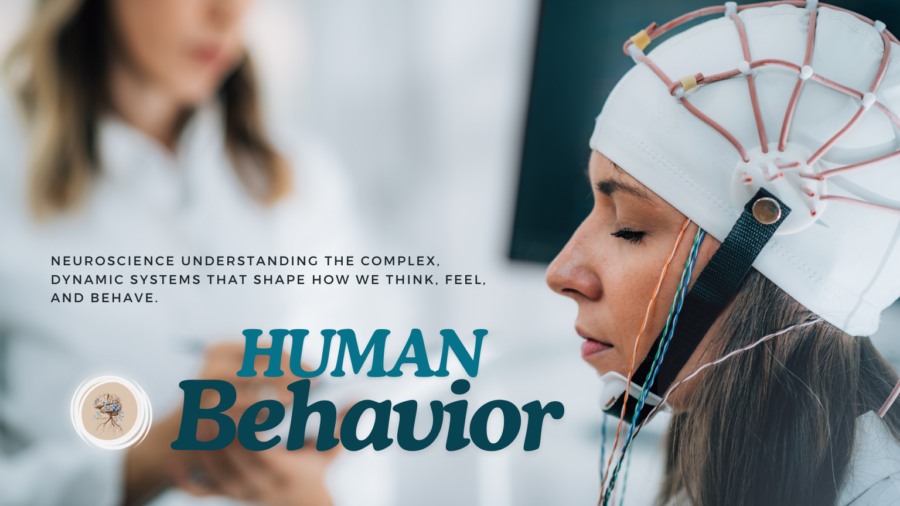
Neuroscience is the scientific study of the nervous system, which includes the brain, spinal cord, and all the nerves in the body. It explores how these systems develop, function, and influence behavior, thoughts, emotions, and bodily processes.
In simpler terms, neuroscience looks at how our brains and nerves work to control everything we do – from moving and sensing the world to thinking, learning, and feeling. It combines biology, psychology, chemistry, and even computer science to understand how neurons communicate, how circuits form, and how the brain supports consciousness and behavior.
Key areas include:
-
Cognitive neuroscience explores how the physical brain gives rise to mental processes such as thinking, learning, memory, language, attention, and decision-making. It looks at how different brain regions and networks work together to help us interpret the world, solve problems, regulate emotions, and form a sense of self. This field helps explain everyday experiences like why we remember some moments and forget others, how we focus, how beliefs are formed, and how experience reshapes the brain over time.
Behavioral neuroscience studies how the nervous system influences behaviour across different situations and stages of life. It connects brain activity with actions, habits, emotional responses, motivation, stress reactions, and social behaviour. This area helps explain why people respond differently to the same environment, how patterns of behaviour are learned and reinforced, and how biology and experience interact to shape personality, coping styles, and resilience.
Clinical neuroscience focuses on understanding what happens in the brain and nervous system when things are not functioning as they should. It studies neurological and psychiatric conditions such as anxiety, depression, trauma, neurodevelopmental disorders, and brain injury. The goal is to improve diagnosis, treatment, and support by understanding the underlying brain mechanisms, while also recognising how psychological, social, and environmental factors influence recovery and wellbeing.
Molecular and cellular neuroscience examines the brain at its most fundamental level, studying neurons, supporting brain cells, and the chemical messengers that allow them to communicate. It looks at how signals are transmitted, how brain cells grow and change, and how these microscopic processes give rise to larger brain functions. This field forms the foundation for all other areas of neuroscience, helping explain how small biological changes can influence mood, cognition, behaviour, and health over time.
Neuroscience has evolved from simply studying brain structures to understanding the complex, dynamic systems that shape how we think, feel, and behave. Learning the basics of neuroscience is empowering because it shows us that people are not the same by design – we are wired differently through biology, experience, and environment. This understanding encourages better communication, more compassion, and fewer assumptions. By recognising these differences, neuroscience creates a space for unity, respect, and deeper understanding, laying the groundwork for navigating our differences with curiosity rather than judgment.