
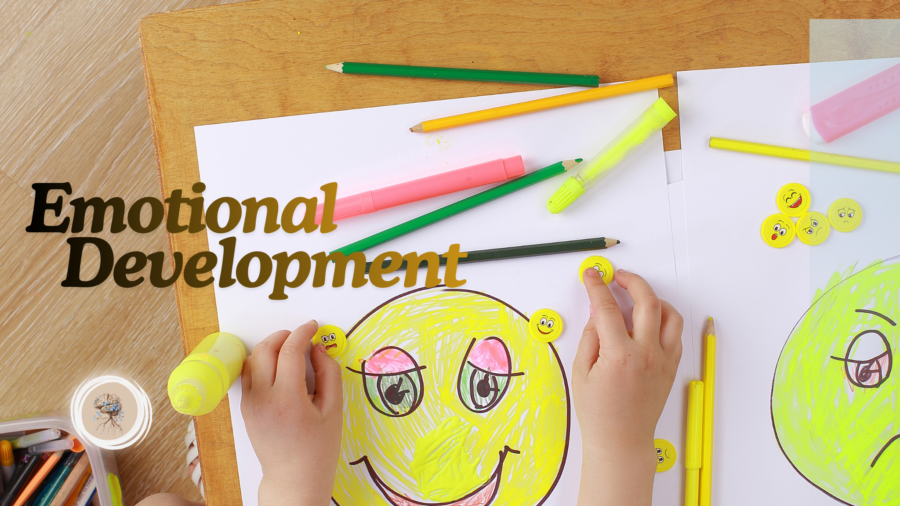
Emotional development refers to the gradual ability to recognise, understand, regulate, and express emotions in ways that are appropriate to one’s age, context, and relationships. It is not about being “emotional” or “calm,” but about developing emotional capacity—the internal skills needed to respond rather than react.
Emotional development begins in infancy and continues across the lifespan. It is shaped by neurobiology, attachment relationships, social learning, culture, and life experiences. Importantly, emotional development is not automatic. Chronological age does not guarantee emotional maturity.
Core Components of Emotional Development
Psychology typically understands emotional development as involving several interconnected capacities:
-
Emotional awareness
The ability to identify and name one’s own emotions and recognise emotions in others. -
Emotional regulation
The ability to manage emotional arousal without suppressing, discharging, or becoming overwhelmed by it. -
Emotional expression
Communicating emotions in ways that are socially appropriate and psychologically safe. -
Empathy and perspective-taking
Understanding that others have emotional experiences separate from one’s own. -
Emotional integration
Using emotions as information to guide behaviour, decision-making, and relationships.
When these capacities develop adequately, individuals can tolerate discomfort, engage in conflict without escalation, and maintain stable relationships.
What “No Emotional Development” Actually Means
A lack of emotional development does not mean a lack of emotions. In fact, individuals with underdeveloped emotional systems often experience strong emotions—but without the internal tools to process them.
When emotional development is limited or disrupted, the following patterns may emerge:
-
Difficulty identifying feelings beyond basic states (e.g. anger, numbness)
-
Emotional reactions that are disproportionate to the situation
-
Reliance on external regulation (control, avoidance, substances, other people)
-
Poor frustration tolerance
-
Black-and-white thinking in relationships
-
Difficulty with accountability and repair after conflict
This is often described clinically as emotional immaturity, not as a character flaw but as a developmental gap.
Developmental Pathways: Why Emotional Development May Stall
Emotional development can be interrupted by:
-
Inconsistent or unsafe caregiving
-
Chronic stress or trauma
-
Emotional neglect (absence of attuned emotional responses)
-
Environments that punish emotional expression
-
Early role reversal (parentification)
-
Lack of modelling for regulation and repair
When emotional learning is interrupted, the nervous system often remains organised around survival rather than connection.
Comparison: Developed vs Undeveloped Emotional Systems
| Developed Emotional System | Undeveloped Emotional System |
|---|---|
| Emotions are recognised and named | Emotions are acted out or suppressed |
| Discomfort can be tolerated | Discomfort triggers reactivity or shutdown |
| Conflict can be navigated | Conflict is avoided or escalated |
| Accountability is possible | Blame or defensiveness dominates |
| Boundaries are clear | Boundaries are rigid or absent |
| Emotions inform behaviour | Emotions control behaviour |
Why Emotional Development Matters in Psychology
Emotional development underpins:
-
Mental health resilience
-
Secure attachment
-
Ethical decision-making
-
Effective communication
-
Therapeutic capacity (for clinicians)
-
Social and relational functioning
Without emotional development, cognitive insight alone is insufficient. A person may understand their behaviour intellectually but remain unable to change it emotionally.
A Critical Point for Students
Emotional development is learned, relational, and ongoing. It can be delayed, disrupted, or repaired at any stage of life. Therapy, reflective relationships, and intentional practice can support continued emotional maturation.
In psychology, the goal is not emotional control, but emotional capacity, the ability to stay present with internal experience without being ruled by it.
Understanding emotional development allows us to approach behaviour with clarity rather than judgement, and intervention with precision rather than assumption.