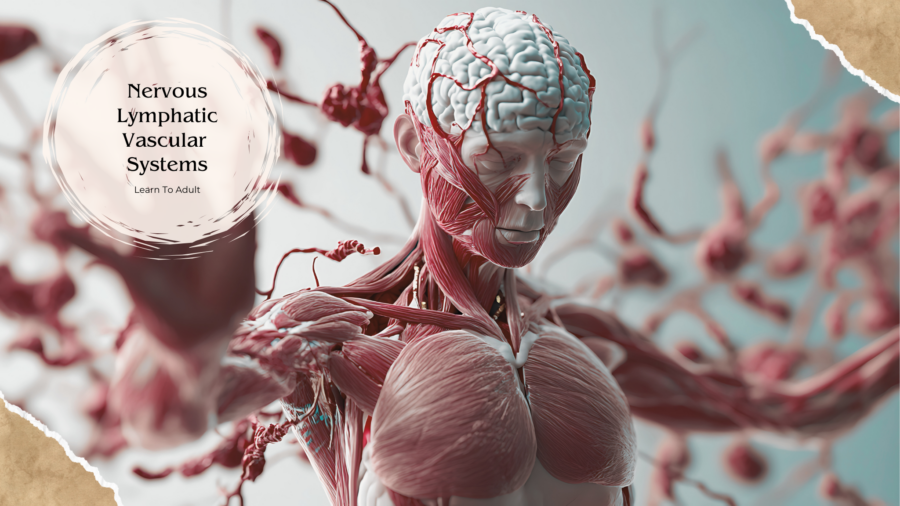
A Trauma‑Informed, Nervous‑System Perspective
The body survives because it remembers harmony.
Before story, before diagnosis, before conscious meaning-making, the body learns how to stay alive. Trauma-informed mental health begins here – with the understanding that the body is not reacting incorrectly, but responding intelligently to what it has known.
Harmony is not a constant state. It is a capacity: the ability to return to balance after disruption. Trauma interrupts this capacity, not by weakness, but by necessity.
Blood: Survival Energy and Mobilisation
The blood moves like a disciplined warrior, carrying life with precision and force. In trauma physiology, this system reflects mobilisation – the body’s ability to act, defend, flee, or endure.
Chronic stress and unresolved trauma keep this warrior permanently activated. Inflammation, fatigue, cardiovascular strain, and emotional volatility often follow. This is not pathology; it is a body that never received the signal that danger has passed.
Trauma‑informed care honours the blood not by pushing resilience, but by restoring safety. Rest, nourishment, predictable routines, and emotional containment allow mobilisation to soften without collapse.
The Nervous System: Safety Before Meaning
The nervous system speaks first – quietly and constantly. It decides safety long before thought forms explanation.
From a trauma‑informed lens, anxiety, depression, dissociation, hypervigilance, and shutdown are states, not identities. They are nervous system strategies developed to survive overwhelming experiences.
A dysregulated system narrows perception and accelerates reaction. A regulated system restores choice.
Healing here is not cognitive first. It is relational and somatic:
- Breath before insight
- Rhythm before reflection
- Safety before story
When the nervous system is met with consistency, attunement, and boundaries, it slowly relearns that the present moment is not the past.
The Lymph: Processing What Was Never Moved
The lymph flows like sacred water — gentle, unforced, and persistent. It clears what no longer belongs.
Trauma often arrests this flow. Emotions that were too dangerous to feel at the time — grief, terror, rage, shame — remain held in the body. Unlike blood, lymph requires movement, breath, and permission.
Trauma‑informed mental health respects pace. Forcing emotional release can retraumatise. Supporting lymphatic and emotional flow means allowing experience to move in tolerable doses.
Healing is not cathartic explosion. It is a gradual thaw.
Alignment as Regulation
Health, in this framework, is regulation – not perfection.
Alignment occurs when:
- The body feels safe enough to rest (blood)
- The nervous system can distinguish past from present (awareness)
- Emotions and sensations are allowed to move through (flow)
When one system is neglected, symptoms emerge as communication. Trauma‑informed work listens rather than corrects.
Mental Health as Re‑Learning Safety
From a trauma‑informed perspective, healing is not becoming someone new. It is returning to the body with consent.
The body remembers harmony, but it must be reminded gently. Through safe relationships, somatic awareness, boundaries, and compassionate pacing, the nervous system learns that survival is no longer the only option.
Resilience does not come from enduring more.
It comes from finally being allowed to rest.
When power, awareness, and flow are brought back into agreement, the body does not just cope — it reorganises. And in that reorganisation, grace becomes possible again.
Integration occurs when the body’s systems are allowed to function in coordination rather than compensation. When circulation is no longer driven by chronic stress, the nervous system can shift from threat detection to regulation, and lymphatic processes can effectively support immune and emotional clearance. Mental health improves not because symptoms are suppressed, but because the body regains the capacity to self-regulate across systems. This integration supports resilience, clearer cognition, emotional stability, and recovery after stress. From a holistic mental health perspective, sustainable wellbeing emerges when physiological safety, neurological regulation, and adaptive flow are addressed together rather than in isolation.